How to Avoid Noisy Long Term Rentals | 2026 Acoustic Audit Guide
In the calculus of modern residency, few variables possess the destructive potential of chronic auditory intrusion. While a cramped kitchen or a lack of natural light may be managed through lifestyle adjustments, noise is an invasive physical force that bypasses the occupant’s agency, directly impacting the autonomic nervous system. For the professional, the researcher, or the family unit, a rental is more than a shelter; it is a controlled environment intended to facilitate cognitive recovery and focused labor. When that environment is compromised by structural or systemic noise, the “Total Cost of Occupancy” transcends the financial, manifesting as sleep fragmentation, diminished executive function, and psychological erosion.
The challenge of the 2026 rental market lies in the deceptive nature of the “viewing.” A twenty-minute walkthrough on a Tuesday afternoon is a statistically insignificant sample of a property’s acoustic life. It reveals nothing of the late-night vibrations from a neighbor’s subwoofer, the pre-dawn resonance of industrial refuse collection, or the seasonal shift in air-conditioning hum. As urban density increases and hybrid work models turn bedrooms into boardrooms, the ability to perform a “Forensic Acoustic Audit” before signing a lease has become a fundamental survival skill for the modern tenant.
This pillar reference is designed to move beyond surface-level advice like “check the windows.” It provides a systemic framework for analyzing the physics of sound transmission, the legal landscape of quiet enjoyment, and the predictive modeling of neighborhood noise patterns. By understanding the structural vulnerabilities of different building archetypes and the logistical rhythms of urban environments, a prospective resident can mitigate the risk of auditory “buyer’s remorse.” We aim to provide the definitive blueprint for securing a sanctuary in an increasingly percussive world.
How to avoid noisy long-term rentals

To master how to avoid noisy long-term rentals, one must first dismantle the myth that “luxury” is synonymous with “quiet.” In many contemporary urban markets, premium pricing is a reflection of location and aesthetic finishes—floor-to-ceiling glass, open-concept floor plans, and central hubs—all of which are frequently acoustic liabilities. A common misunderstanding among high-end renters is the belief that a new building will naturally have better soundproofing. In reality, modern “stick-built” luxury mid-rises often utilize lightweight materials that, while meeting minimal building codes, struggle to mitigate the low-frequency thrum of modern appliances or the impact noise of footsteps from above.
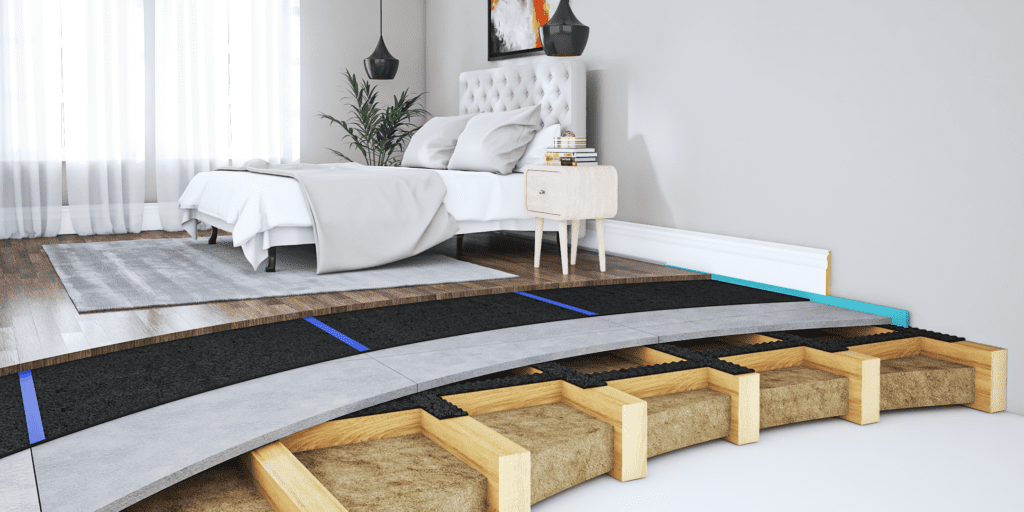
From a structural perspective, the search must prioritize “Mass” and “Decoupling.” Sound is energy traveling through matter; the more mass a structure has (such as thick concrete slabs or double-wythe brick walls), the more energy it absorbs. However, mass alone is insufficient for impact noise—the “thud” of a dropped object. True acoustic integrity requires “decoupled” construction, where the finished floor is physically separated from the structural slab by resilient channels or sound-absorbing underlayments.
From a contextual perspective, the prospective resident must act as an amateur urban planner. Noise is not a static state; it is a cycle. A street that appears serene during a viewing may be a primary artery for emergency vehicles or a staging ground for a 4:00 AM commercial bakery delivery. Understanding how to avoid noisy long-term rentals involves mapping the “External Logistics” of the building.
Finally, we must consider the Psychological Dimensionality. Humans are remarkably adept at filtering out white noise, such as distant traffic, but we are biologically wired to react to “Intermittent Impulsive Noise”—a barking dog, a slamming door, or a sudden shouting match. Therefore, the audit must look beyond the ambient decibel level and focus on the “Unpredictability Factor.”
Historical and Systemic Drivers of Urban Acoustic Degradation
The evolution of the urban soundscape is a story of shifting materials. Pre-war construction (before 1940) relied heavily on dense masonry and plaster-on-lathe walls, which provided exceptional high-frequency isolation. However, the post-war housing boom necessitated speed and cost-efficiency, leading to the rise of drywall and hollow-core doors.
By the early 2000s, the “Open Concept” trend removed the internal walls that historically acted as sound baffles. In 2026, we see a compounding effect: the “Appliance Proliferation.” Every modern rental now includes a dishwasher, in-unit laundry, and high-efficiency HVAC—all of which generate localized vibration and hum. When combined with the “Hard Surface Aesthetic” (hardwood floors and tile), the modern rental has become a reverberant chamber where sound has nowhere to be absorbed, only reflected.
Conceptual Frameworks for Acoustic Forensics
1. The “STC vs. IIC” Framework
-
Sound Transmission Class (STC): Measures how well a partition blocks airborne sound (voices, TV). A rating of 50 is the standard for “quiet” living.
-
Impact Isolation Class (IIC): Measures how well a floor blocks impact sound (footsteps, moving furniture). A unit can have a high STC but a low IIC, meaning you won’t hear your neighbor’s conversation, but you will hear every step they take.
2. The “Acoustic Shadow” Model
This framework involves identifying units that are shielded by the building’s own mass. A unit facing a quiet interior courtyard or tucked behind a stairwell core is in an “acoustic shadow,” protected from the “Line-of-Sight” transmission of street noise.
3. The “Diurnal Cycle” Analysis
This mental model maps the 24-hour sound profile of a location. It accounts for “The School Run,” “The Happy Hour,” and “The Sanitation Shift.” A successful rental selection requires aligning your sleep and work schedule with the quietest periods of that specific micro-neighborhood.
Building Archetypes and Sound Transmission Class (STC)
Understanding the “Skeleton” of the building is the most reliable predictor of long-term acoustic satisfaction.
Decision Logic: The “Top Floor” Imperative
In almost every building archetype except post-tension concrete, the most effective way to eliminate impact noise is to eliminate the neighbor above. The “Top Floor Premium” is rarely a waste of money; it is a direct investment in the removal of the IIC variable entirely.
Operational Stress Tests: Real-World Scenarios
Scenario 1: The “Courtyard Echo”
A tenant selects an apartment facing an interior courtyard to avoid street traffic.
-
The Failure: The courtyard acts as a “Parabolic Reflector,” amplifying the sound of one neighbor’s phone call or a crying baby across all units.
-
The Correction: Avoid courtyards with hard landscaping (concrete/stone). Seek courtyards with significant vegetation, which acts as a natural sound diffuser.
Scenario 2: The “Sub-Floor Resonance”
A tenant moves into a modern “Luxury” building with “LVP” (Luxury Vinyl Plank) flooring.
-
The Failure: The developer skipped the acoustic underlayment. Every heel-strike from the upstairs neighbor resonates as a “drum-like” boom.
-
The Correction: During the viewing, have a partner walk heavily in the hallway or unit above while you listen inside.
Scenario 3: The “Mechanical Hum”
A tenant rents a beautiful penthouse unit.
-
The Failure: The unit is directly below the building’s massive roof-mounted HVAC chillers. The 24/7 vibration leads to “Low-Frequency Fatigue.”
-
The Correction: Check the roof layout. Never rent the floor immediately adjacent to mechanical rooms or roof decks.
Planning and Resource Dynamics: The Economics of Quiet
Quiet is an increasingly expensive commodity. When you calculate how to avoid noisy long-term rentals, you must factor in “Corrective Costs”—the money you will spend trying to fix a noisy unit you’ve already signed for.
Table: The “Corrective Cost” of Acoustic Failure
The “Opportunity Cost” of a noisy rental is even higher. A single month of poor sleep can lead to decreased productivity that far outweighs the $200/month premium for a quieter, top-floor unit.
The Technological Toolkit: Mapping the Soundscape
In 2026, the prospective tenant has access to tools that were once the province of acoustic engineers.
-
Decibel Meter Apps: Use these during the viewing to establish a “Baseline.” A quiet room should be < 30 dB.
-
Spectrum Analyzers: These apps identify “Low-Frequency Hum” (30-60 Hz) that might be missed by the human ear during a brief visit but will cause headaches over time.
-
Local “Noise Complaint” Heatmaps: Many municipal “Open Data” portals map 311 noise complaints. A cluster of complaints around your building is a red flag.
-
Satellite Imagery: Use Google Earth to identify “Hidden Acoustic Hazards” like loading docks, bus depots, or HVAC arrays on neighboring rooftops.
-
Night-Time Drive-Bys: Visit the property at 10:00 PM on a Friday and 6:00 AM on a Monday. This is the only way to see the “Shadow Soundscape.”
The Risk Landscape: Compounding Failures in Acoustic Selection
The most dangerous noise risks are those that “compound.”
-
Acoustic + Thermal Failure: If a unit has poor insulation, you will be forced to run the HVAC constantly, creating a permanent internal hum to combat the external noise.
-
The “Short-Term Rental” Contagion: Buildings that allow high volumes of nightly stays (STRs) are prone to “Party Noise” and “Suitcase Dragging,” which ignore the social norms of long-term residency.
-
The “Gentrification Construction” Loop: Moving into an “Up-and-Coming” neighborhood often means you will be surrounded by 7:00 AM jackhammers for the duration of your three-year lease.
Governance and Long-Term Adaptation: The Lease as a Shield
A lease should be viewed as a “Governance Document.” If the environment becomes noisy, your ability to break the lease without penalty is your only leverage.
The “Quiet Enjoyment” Audit:
-
Specific Clauses: Does the lease define “Quiet Hours”?
-
Flooring Requirements: Does the building require 80% rug coverage for all units? This protects you from the neighbor above.
-
The “Transfer Clause”: Negotiate a clause that allows you to move to a different unit in the building if acoustic issues are documented and unresolvable.
Measurement and Evaluation: Qualitative vs. Quantitative Signals
How do you evaluate a unit in under 30 minutes?
-
The “Door Slam” Test: Close the front door. If the frame rattles or you can hear the hallway clearly, the “Seal” is poor. Sound is like water; if air can get in, sound can get in.
-
The “Faucet Resonance”: Turn on the water. If the pipes “shriek” in the walls, the plumbing is not vibration-isolated.
-
The “Demographic Clues”: Look at the mailboxes or the trash room. Are there many families? Young professionals? This helps predict the “Activity Rhythm” of the building.
Common Misconceptions and Industry Myths
-
Myth: “Double-paned windows are soundproof.”
-
Reality: They are for thermal insulation. True soundproof windows (STC 45+) require a large “Air Gap” and dissimilar glass thicknesses.
-
-
Myth: “I can just use noise-canceling headphones.”
-
Reality: These are effective for constant low-end (plane engines) but poor at stopping “Sudden Impulsive Noises” like a neighbor’s scream or a door slam.
-
-
Myth: “The higher the floor, the quieter the unit.”
-
Reality: High floors are actually more exposed to “City Hum” because there are fewer buildings to block the line-of-sight sound from the horizon.
-
Ethical and Practical Considerations
In the quest for quiet, there is an ethical dimension to “Acoustic Displacement.” As wealthier tenants seek out quiet enclaves, they often inadvertently drive up prices in historically quiet, low-density neighborhoods, displacing long-term residents. Furthermore, being a “Quiet Tenant” is a communal responsibility. Managing how to avoid noisy long-term rentals is only half the battle; the other half is ensuring your own “Domestic Footprint” doesn’t infringe upon the sanctuary of others. This involves the use of high-quality rug padding and the mindful placement of subwoofers away from shared walls.
Conclusion: The Future of Auditory Sovereignty
The ability to control one’s acoustic environment is becoming a primary marker of “Living Quality” in the 21st century. As our homes become the central hubs for our entire lives, the “Sanctity of Silence” is no longer a luxury—it is a physiological necessity.
Mastering how to avoid noisy long-term rentals requires a shift from passive observation to active, forensic investigation. It demands an understanding of the interplay between structural mass, neighborhood logistics, and legal protections. By applying the frameworks of STC/IIC ratings and diurnal cycle mapping, the prospective tenant moves from a position of hope to a position of data-driven confidence. In the end, a quiet home is not just a place where you can’t hear the neighbors; it is a place where you can finally hear yourself.