How to Manage Long Term Stay Security: A Definitive 2026 Guide
The traditional hospitality security model is largely predicated on the “transient assumption”—the idea that a guest’s presence is fleeting, their belongings are minimal, and their digital footprint on the property is shallow. However, as the global workforce shifts toward multi-month assignments and nomadic residency, this assumption has become a structural liability. Security for a three-day tourist is a matter of lock integrity and lobby surveillance; security for a ninety-day resident is a complex orchestration of data privacy, physical sovereignty, and psychological safety.
In the contemporary landscape, the “room” is no longer just a sleeping quarter; it is a high-stakes node in a corporate network. The challenge for property managers and corporate travel departments is to move beyond the superficial “security theater” of cameras and guards toward a comprehensive system of risk mitigation that respects the guest’s need for a low-friction life.
True mastery of this domain requires an analytical decoupling of perceived safety from actual resilience. A gated entrance might provide emotional comfort, but it offers zero protection against a man-in-the-middle attack on the property’s Wi-Fi or a social engineering exploit targeting the front desk. This definitive guide examines the convergence of physical and digital defense layers, providing a rigorous framework for those tasked with protecting the modern semi-permanent resident.
Understanding “how to manage long-term stay security.”
To effectively address how to manage long-term stay security, one must first recognize the fundamental shift in the “trust boundary.” In a short-term stay, the guest trusts the hotel to keep them safe for a weekend. In a long-term stay, the hotel becomes a silent partner in the guest’s daily life. This requires a transition from reactive monitoring to proactive architecture. A common misunderstanding is that long-term security is merely “more” of the same security used for nightly guests. In reality, it is a different discipline entirely, focusing on the cumulative vulnerabilities that arise over time.
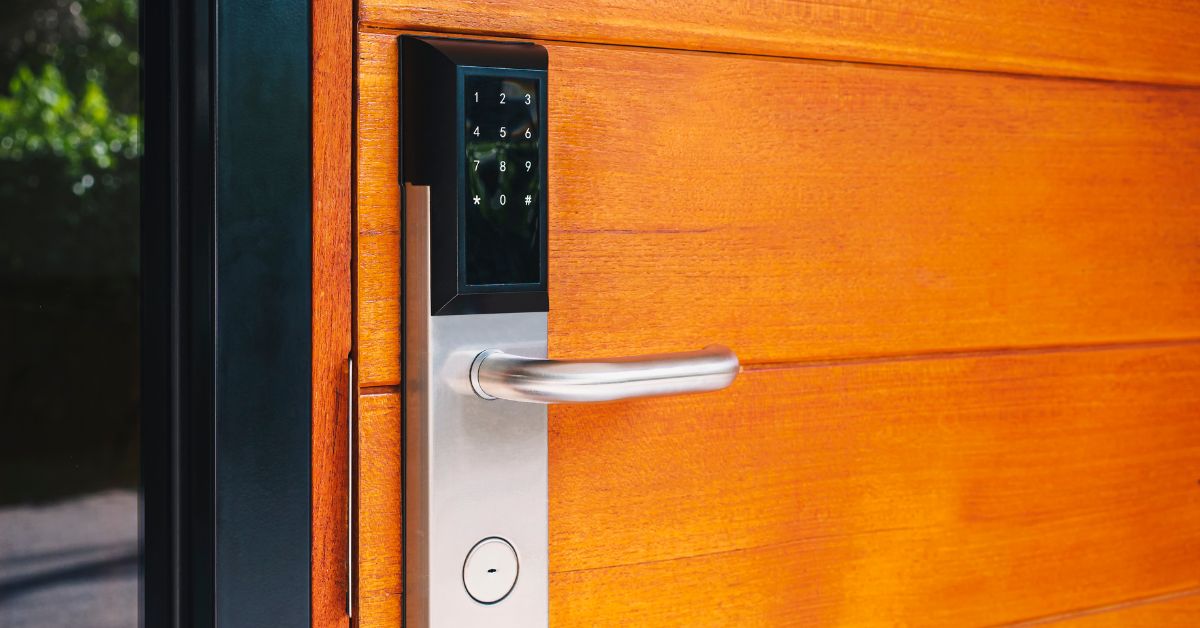
From a physical perspective, long-term stay security is about “Access Management Lifecycle.” Every time a staff member enters a room for weekly cleaning, every time a maintenance worker fixes a leaky faucet, and every time a delivery person drops off a package, the security perimeter is breached. A professional management plan must account for these hundreds of touchpoints, ensuring that access is not only granted but also meticulously logged and automatically revoked. The risk of oversimplification here is relying on physical keys or master cards that lack an audit trail, creating “blind spots” in the property’s history.
From a digital perspective, the security plan must treat the guest’s internet connection as a “Zero Trust” environment. Over a ninety-day stay, a guest will likely access corporate intranets, banking portals, and private healthcare data. If the property uses a standard, shared Wi-Fi network with basic encryption, it is essentially providing a playground for local traffic sniffing. Understanding the nuances of this guide involves implementing VLAN (Virtual Local Area Network) isolation for every unit, ensuring that the digital wall between guests is as thick as the physical one.
The Taxonomy of Risk in Prolonged Residency
The risks associated with extended stays are not static; they compound. We categorize these into three primary domains of vulnerability.
1. Cumulative Physical Exposure
The longer a unit is occupied, the higher the probability of an “inside-out” breach. This refers to the degradation of physical hardware—locks that fail, window latches that loosen—and the increased likelihood of unauthorized key duplication or credential sharing with local acquaintances.
2. Digital Residue and Network Fatigue
Over months, hardware such as Smart TVs, IoT thermostats, and voice assistants accumulate vast amounts of guest data. If these systems are not rigorously wiped between residents, or if the firmware is not updated to patch new vulnerabilities, the unit becomes a “data mine” for the next occupant or a remote hacker.
3. Social and Jurisdictional Risk
In many regions, a stay exceeding 30 days grants the occupant “Tenant Rights.” This shifts the security burden because the property manager can no longer simply evict a disruptive or dangerous individual with the ease of a hotel checkout. The legal framework of security becomes as important as the physical locks.
Conceptual Frameworks: Mental Models for Asset Protection
The “Onion” Defense Model
This model posits that security is a series of concentric circles. For a long-term resident, the outermost layer is the neighborhood/perimeter, followed by the building entrance, the floor access, the unit door, and finally, the in-room safe or encrypted network. A failure in one layer should not compromise the entire system.
The “Least Privilege” Access Logic
Borrowed from cybersecurity, this framework dictates that no one—including staff—should have more access than is strictly necessary for their role.
The “Erosion of Vigilance” Theory
This psychological model warns that as humans become comfortable in an environment (the “home away from home” feeling), they naturally lower their guard. They stop double-locking doors or leave laptops in plain sight. Security management must include “Ambient Reminders”—subtle environmental cues that encourage guests to maintain basic security hygiene without feeling surveilled.
Physical and Digital Integration Categories
To implement a robust plan, operators must choose between various levels of integration.
Decision Logic: The “Asset-to-Risk” Ratio
If the resident is a C-suite executive or a government contractor, the Full Lifecycle Managed category is the only defensible choice. For mid-level relocations, the VLAN Isolated model provides the best balance of digital protection and cost-efficiency.
Real-World Scenarios and Systemic Failure Modes
Scenario 1: The “Digital Ghost” Breach
-
Context: A guest checks out after a 120-day stay in a high-end serviced apartment.
-
The Failure: The cleaning crew resets the room but forgets to factory-reset the Smart TV and the voice assistant.
-
The Breach: The next guest accesses the previous resident’s logged-in Netflix, Amazon, and potentially their calendar and emails via the voice assistant’s cached credentials.
-
Outcome: Massive data leak and reputational damage to the property brand.
Scenario 2: The “Master Key” Social Engineering
-
Context: A malicious actor observes the routine of a long-term corporate resident.
-
The Interaction: The actor dresses as a delivery driver and approaches a junior staff member, claiming the resident “forgot to leave the door unlocked for a sensitive package.”
-
The Failure: The staff member, wanting to be “hospitable” to a familiar-looking situation, uses a master key to grant entry.
-
Outcome: Theft of corporate hardware and sensitive physical documents.
Economics of Resilience: Costs and Resource Allocation
Investing in long-term security is an exercise in mitigating “Tail Risk”—the low-probability, high-consequence events that can bankrupt a property or ruin a corporate reputation.
Table: Comparative Security Investment Over a 12-Month Cycle
The Opportunity Cost of “Lax Security”
For corporate housing providers, the “Top-Line” revenue is directly tied to the security audit. Many Fortune 500 companies will not place their employees in a property that cannot provide a documented VLAN isolation and access audit log. Therefore, the cost of not upgrading is the loss of high-value, long-term contracts.
Tools, Strategies, and Support Systems
The following tools are the bedrock of a modern security plan:
-
MAC Address Whitelisting: Ensuring that only the guest’s specific devices can connect to the unit’s network, preventing “parking lot” hacking.
-
Encrypted In-Room Safes with Audit Trails: Safes that record every time they are opened and by whose code (Staff vs. Guest).
-
Hardware Security Modules (HSM): For properties managing their own keys, ensuring the “Digital Keys” are never stored in plain text.
-
Privacy-First Motion Sensors: Using heat or ultrasonic sensors (not cameras) to detect unauthorized entry when the guest is “Away” without violating privacy.
-
Automated “Digital Deep Clean” Software: Scripts that trigger a factory reset of all in-room IoT devices the moment a guest is marked as “Checked Out” in the PMS.
-
Staff Access Windows: Digital keys for housekeepers that only function within a specific 2-hour window on a specific day.
The Risk Landscape: Compounding Vulnerabilities
As technology evolves, the “Security Surface” of a long-term stay expands. We must watch for:
-
IoT Fragility: Every smart lightbulb is a potential entry point for a botnet. If the property’s IoT devices are on the same network as the guest’s laptop, the risk is exponential.
-
Physical Key Shadowing: The risk of “Bump Keys” or sophisticated lock-picking increases the longer a guest is away from the room, as it gives intruders more time to work without detection.
-
Credential Stuffing: Using leaked passwords from other breaches to try to access the property’s guest portal or digital key system.
Governance, Maintenance, and Long-Term Adaptation
Security is not a “set and forget” feature; it is a process of continuous governance.
The “Security Health” Checklist (Monthly)
-
[ ] Firmware Audit: Check all smart locks and routers for pending security patches.
-
[ ] Access Log Review: Randomly audit three rooms to ensure no unauthorized staff entries occurred.
-
[ ] Physical Integrity Check: Inspect window locks and balcony doors for signs of tampering or wear.
-
[ ] Network Stress Test: Attempt to “jump” from one unit’s Wi-Fi to another to ensure VLAN isolation is holding.
Adaptation Triggers
If a property experiences more than two “Lost Key” incidents in a month, or if the “Failed Login” attempts on the guest Wi-Fi spike by 20%, the governance plan must trigger a “Hard Reset” of security protocols and staff retraining.
Measurement, Tracking, and Evaluation
How do we quantify “Safety”? We use a mix of leading and lagging indicators.
-
Leading Indicator: “Time to Patch.” The average number of days between a vulnerability release and the property’s firmware update.
-
Lagging Indicator: “Incident Rate per 1,000 Room Nights.” The number of physical or digital breaches reported.
-
Qualitative Signal: “Guest Security Sentiment.” Post-stay surveys that ask: “Did you feel your digital data was secure during your stay?”
Documentation Examples
-
The “Chain of Custody” Log: A digital record showing exactly who had access to a guest’s room for a maintenance call.
-
The “VLAN Verification Report”: A technical document provided to corporate clients proving their employees’ data is isolated.
Common Misconceptions and Industry Myths
-
Myth 1: “Incognito mode protects you on hotel Wi-Fi.” Correction: Incognito only hides your history on your device; it does nothing to prevent the network owner or a hacker from seeing your traffic.
-
Myth 2: “A 24-hour guard makes a property safe.” Correction: Guards are a deterrent for physical crime, but are useless against digital theft or sophisticated social engineering.
-
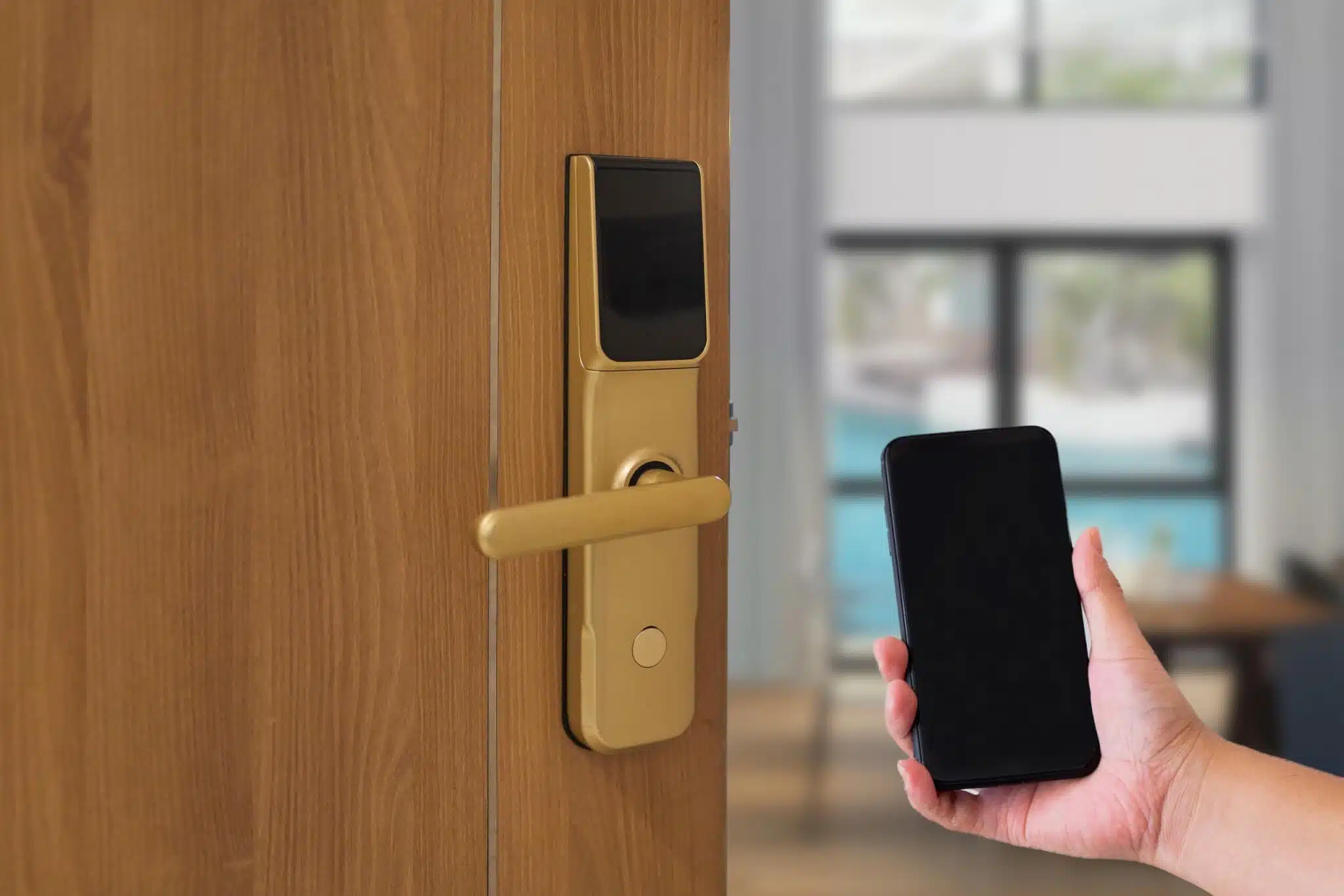
Myth 3: “Smart locks are less secure than metal keys.” Correction: Smart locks with audit trails are significantly more secure because they cannot be easily “copied” at a hardware store, and they leave a record of use.
-
Myth 4: “Security is the guest’s responsibility.” Correction: In a long-term stay, the property provides the “Digital and Physical Utility.”
Ethical and Practical Considerations
There is a fine line between “Security” and “Surveillance.” Managing a long-term stay requires an ethical commitment to guest privacy. Cameras should never be placed in private areas, and even in public corridors, their use must be disclosed. Data collected for security (such as access logs) must be purged after a set period to avoid creating a “Life Log” of the guest that could be subpoenaed or leaked. The goal is to provide a “Shield,” not a “Microscope.”
Conclusion: The Future of Defensive Hospitality
Mastering how to manage long-term stay security is a journey toward systemic resilience. As our lives become more digital and our work more mobile, the places where we stay must become more than just four walls—they must become fortified hubs of productivity and privacy. The future belongs to property managers who can offer “Invisible Fortification”: security that is rigorous and uncompromising on the back end, but seamless and welcoming on the front end.
By prioritizing the digital perimeter alongside the physical one, and by treating guest data with the same reverence as guest property, the hospitality industry can build the trust necessary for the next generation of global residents.